General
The April election brings with it a race for a critical seat on the Wisconsin Supreme Court, where Justice Rebecca Bradley, an incumbent justice on the court since 2015, announced in August 2025 that she would not seek another 10-year term. Her decision has created an open seat for the April 7, 2026, election, which features Constitutionalist candidate Maria Lazar, and Liberal Activist Chris Taylor.
The professional trajectory of Maria S. Lazar, currently a judge on the Wisconsin Court of Appeals for District II, reflects a three-decade immersion in the Wisconsin legal system, spanning private practice, executive-level advocacy, and two levels of the judiciary. Born Maria Pellegrini in 1964 in Milwaukee, Wisconsin, her development as a jurist is intrinsically linked to the legal and political evolution of the southeastern Wisconsin region. Her career began in the private sector where she specialized in complex civil litigation, a foundation that later informed her work as an Assistant Attorney General and her eventual elevation to the bench.
Personal History
Lazar’s personal history is rooted in a family-oriented environment within the Milwaukee and Waukesha communities, factors that appear to have influenced her later professional interests in juvenile welfare and community-based judicial initiatives. Following her marriage to Thomas Lazar and the completion of her legal education, she established a consistent presence in Milwaukee’s legal circles, eventually becoming a prominent figure in conservative legal societies such as the Federalist Society. Her career move from private practice to the Wisconsin Department of Justice (DOJ) in 2010 coincided with a significant shift in the state’s political and legal landscape, positioning her as a lead defender of controversial and landmark state policies.
Professional Summary
The professional history of Judge Maria S. Lazar reveals a jurist who is deeply embedded in the textualist tradition and who has consistently navigated the most contentious legal issues in Wisconsin's recent history. Her early private practice in Milwaukee provided her with the requisite skills for complex civil litigation, while her five years as an Assistant Attorney General established her as a primary advocate for state legislative authority during the political shifts of the 2010s. Her subsequent elevation to the circuit court and the appellate court has allowed her to apply her philosophy to criminal, juvenile, and environmental law, often resulting in rulings that favor restricted administrative agency power and protected constitutional rights regarding firearms and property.
Defense of 2011 Wisconsin Act 10
Lazar gained statewide notoriety for her role as the lead trial attorney defending 2011 Wisconsin Act 10, the “budget repair” bill. The litigation surrounding Act 10 was multifaceted, involving both the substance of the law and the procedural rules governing the protests at the Wisconsin State Capitol. Initially, Lazar represented the Wisconsin Department of Administration in litigation over security protocols and access rules implemented to manage the thousands of protesters gathered at the Capitol.
In the broader constitutional challenge to Act 10, she formulated the state’s defense against claims that the law violated the First Amendment rights of public workers and the equal protection clause. Her efforts were successful, culminating in a June 2011 decision by the Wisconsin Supreme Court that upheld the constitutionality of the act. This victory was a defining moment in her career, establishing her as a primary advocate for legislative authority and executive prerogative.
Summary
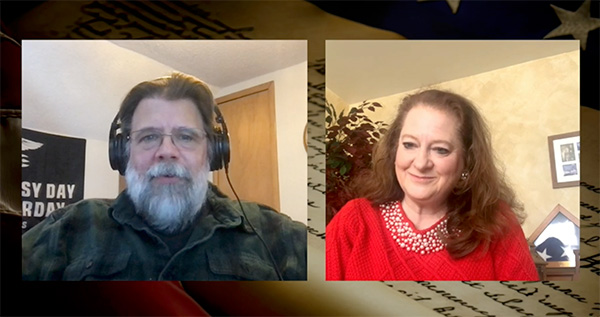
This talk is just about 30 minutes long, and gets into a fair amount of detail about how Judge Lazar sees the judicial world, which says a lot about the impact she will have if elected to the State Supreme Court.
As always, thanks for taking the time to look.